
Introduction
Running a small business in 2026 means doing more with less time, fewer resources, and higher customer expectations. Whether you manage an online store, a local service business, a consulting brand, or a growing startup, one thing is clear: AI tools are no longer optional.
The right AI tools can help small businesses write better content, respond to customers faster, manage tasks, automate repetitive work, create designs, analyze data, and improve decision-making. Instead of hiring a large team for every function, small business owners can now use AI-powered software to handle daily tasks more efficiently.
But with so many AI tools available, choosing the right ones can feel overwhelming. This guide explains the most useful categories of AI tools for small businesses in 2026 and how to choose the best options for your workflow.
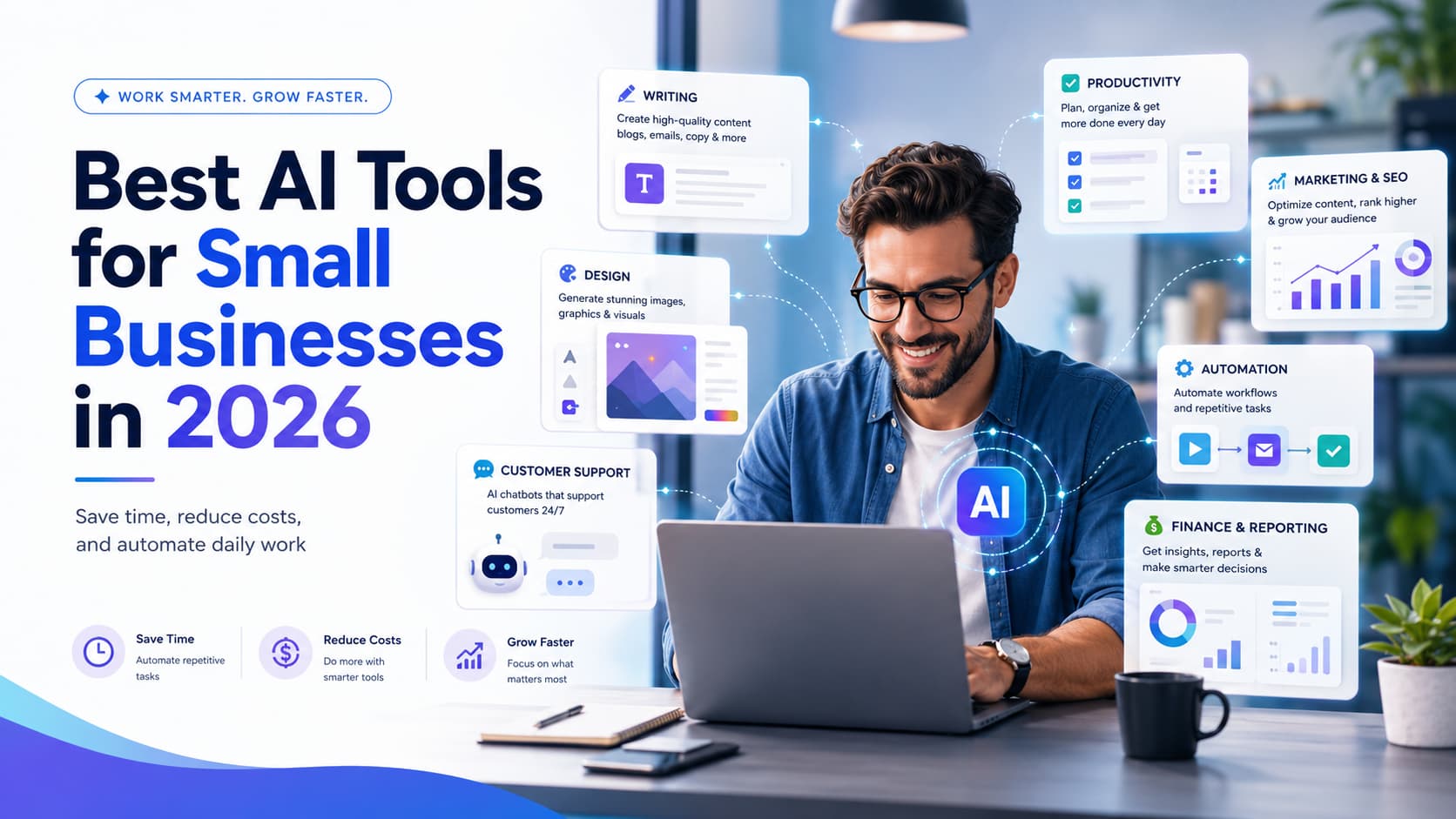
1. AI Writing and Content Creation Tools
Content is still one of the most important parts of business growth. Small businesses need blog posts, social media captions, email newsletters, product descriptions, ads, website copy, and customer messages.
AI writing tools help you create first drafts quickly. They can generate ideas, improve grammar, rewrite text in different tones, and help you produce more content without starting from a blank page.
For example, a small business owner can use an AI writing tool to create a weekly blog outline, write Instagram captions, draft product descriptions, or prepare a customer follow-up email. This saves hours every week and allows the business to stay consistent online.
When choosing an AI writing tool, look for features such as tone control, SEO suggestions, editing support, templates, and the ability to rewrite or summarize content.
2. AI Design and Image Tools
Not every small business can afford a full-time designer. AI design tools make it easier to create social media graphics, banners, thumbnails, presentations, logos, and promotional visuals.
These tools are especially useful for businesses that need regular marketing content. Restaurants can create menu promotions, coaches can design webinar graphics, e-commerce stores can create product visuals, and local businesses can design flyers or ads.
A good AI design tool should offer templates, brand kits, easy editing, image generation, background removal, and export options for different platforms.
The biggest advantage is speed. Instead of spending hours designing a simple post, business owners can create polished visuals in minutes.
3. AI Customer Support Tools
Customer support is one of the most time-consuming parts of running a business. Customers ask about pricing, orders, appointments, refunds, availability, services, and product details.
AI chatbots and customer support tools can answer common questions automatically. They can also collect customer information, guide users to the right page, and reduce the number of repetitive messages your team has to handle.
For small businesses, this is extremely valuable. A chatbot can work 24/7, even when the business owner is offline. This improves response time and gives customers a better experience.
When choosing an AI customer support tool, check whether it integrates with your website, email, live chat, CRM, or social media platforms. Also make sure you can customize the answers so the chatbot reflects your brand and business policies.
4. AI Productivity and Task Management Tools
Small business owners often manage sales, marketing, customer service, finances, team communication, and operations at the same time. AI productivity tools help organize this workload.
These tools can summarize meetings, create task lists, prioritize work, remind you of deadlines, organize notes, and help teams collaborate more effectively.
For example, after a meeting, an AI assistant can create a summary, list action items, and assign tasks. This reduces confusion and keeps everyone aligned.
The best productivity tools are simple, easy to use, and compatible with your existing workflow. Look for tools that connect with calendars, documents, project boards, email, and messaging apps.
5. AI Marketing and SEO Tools
Marketing can be expensive, but AI tools make it easier for small businesses to compete. AI marketing tools can help with keyword research, blog planning, ad copy, email campaigns, competitor analysis, and content optimization.
SEO tools are especially useful because they help businesses attract organic traffic from search engines. Instead of guessing what customers are searching for, you can use AI-powered keyword and content tools to plan better blog topics and optimize your website pages.
For example, a small business selling handmade products could use an AI SEO tool to find keywords like “personalized gifts,” “custom home decor,” or “unique birthday gifts.” Then, the business can create content around those topics.
Good AI marketing tools should provide practical recommendations, not just data. Look for tools that help you understand what to improve and how to improve it.
6. AI Automation Tools
Automation tools are some of the most powerful solutions for small businesses. They connect different apps and automate repetitive tasks.
For example, you can automatically send new leads from your website to your CRM, add customers to an email list, create invoices, send reminders, update spreadsheets, or notify your team when a sale happens.
This reduces manual work and helps prevent mistakes. Instead of copying information from one tool to another, automation platforms do it for you.
Small businesses should start with simple automations. Begin with tasks you repeat every day or every week. Once those are working, you can build more advanced workflows.
7. AI Finance and Reporting Tools
Understanding numbers is essential for business growth. AI finance tools can help track expenses, organize invoices, forecast cash flow, categorize transactions, and create financial reports.
AI reporting tools can also turn business data into simple insights. Instead of manually reviewing spreadsheets, business owners can use AI dashboards to understand sales trends, customer behavior, and performance.
This helps you make better decisions. You can see what is working, what needs improvement, and where money or time is being wasted.
How to Choose the Best AI Tools for Your Business
Before choosing any AI tool, ask three simple questions:
Does this tool solve a real problem?
Will it save time or improve results?
Is it easy enough for my team to use consistently?
Avoid buying tools just because they are popular. The best AI tool is the one that fits your actual business needs.
Start with one or two categories first. For most small businesses, writing, productivity, customer support, and automation tools are the best starting points.
Conclusion
AI tools can help small businesses work faster, look more professional, serve customers better, and grow with fewer resources. In 2026, the most successful small businesses will not be the ones using every AI tool available. They will be the ones choosing the right tools for the right tasks.
Start by identifying your biggest time-wasting tasks. Then explore AI tools that can help you simplify, automate, or improve those areas.
To discover useful AI software, productivity tools, automation platforms, and digital solutions, explore Appvora Tools and find tools that match your business goals.